
therapy at your own pace
A safe, thoughtful space to begin making sense of what happened.
Therapy is not about being fixed. It is about being heard, understood, and gently supported as you begin to untangle the patterns, beliefs, and emotional responses that difficult relationships have left behind.
You do not need to have everything figured out
Many people arrive at therapy feeling unsure of where to start. You might know something feels wrong but struggle to articulate it. You might have spent years managing on your own, rationalising, or pushing through.
That is completely normal. Therapy begins wherever you are. There is no right way to start, and you do not need to prepare or perform. The first step is simply showing up and allowing yourself to be met with care.
In our initial consultation, we will talk about what is bringing you to therapy, what you are hoping for, and whether working together feels like the right fit. It is a calm, low-pressure conversation with no obligation to continue.
Fifty minutes of focused, unhurried attention
Sessions last 50 minutes and take place weekly or fortnightly, either face-to-face in Horsforth, Leeds, or online via secure video. Each session is a confidential, one-to-one space designed around what you need.
There is no rigid formula. Some weeks you might arrive with something specific to explore. Other weeks, what matters most may emerge through conversation. I follow your lead while gently holding the thread of your wider therapeutic journey.
Over time, sessions become a place where you can say the things you have never been able to say, feel feelings you have learned to suppress, and begin to relate to yourself differently.
Understanding what happened to you, not what is wrong with you
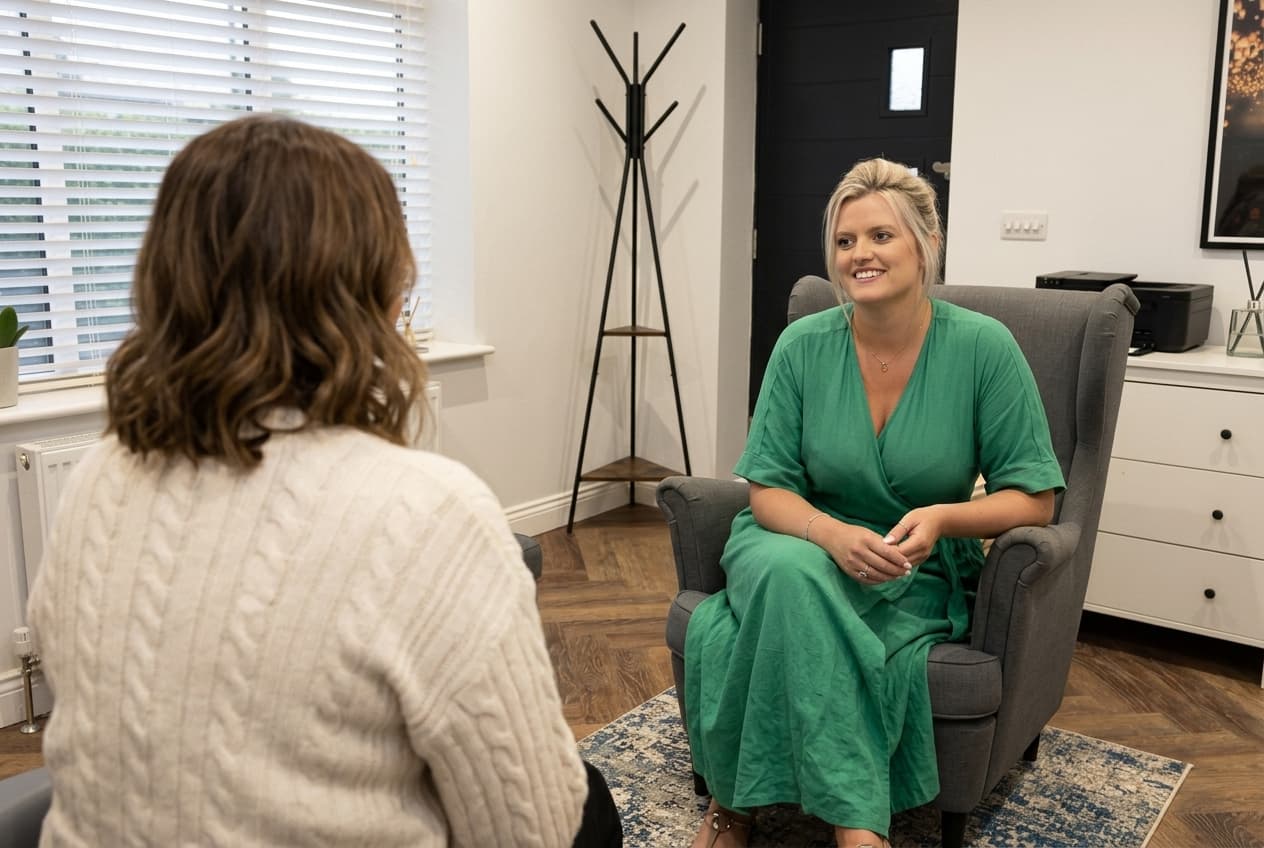
A trauma-informed approach means that everything we do in therapy is guided by an understanding of how difficult experiences shape the nervous system, the sense of self, and the capacity for trust.
Rather than focusing on symptoms in isolation, we look at the context of your life, your relationships, and the survival strategies you developed to cope. These responses made sense at the time. In therapy, we can begin to update them.
This approach is particularly important for people who have experienced relational trauma, emotional abuse, or narcissistic abuse, where the harm was often subtle, sustained, and deeply personal. You can read more about how I work with these specific experiences on the relational trauma therapy and narcissistic abuse therapy pages.
Lasting change happens through relationship, not instruction
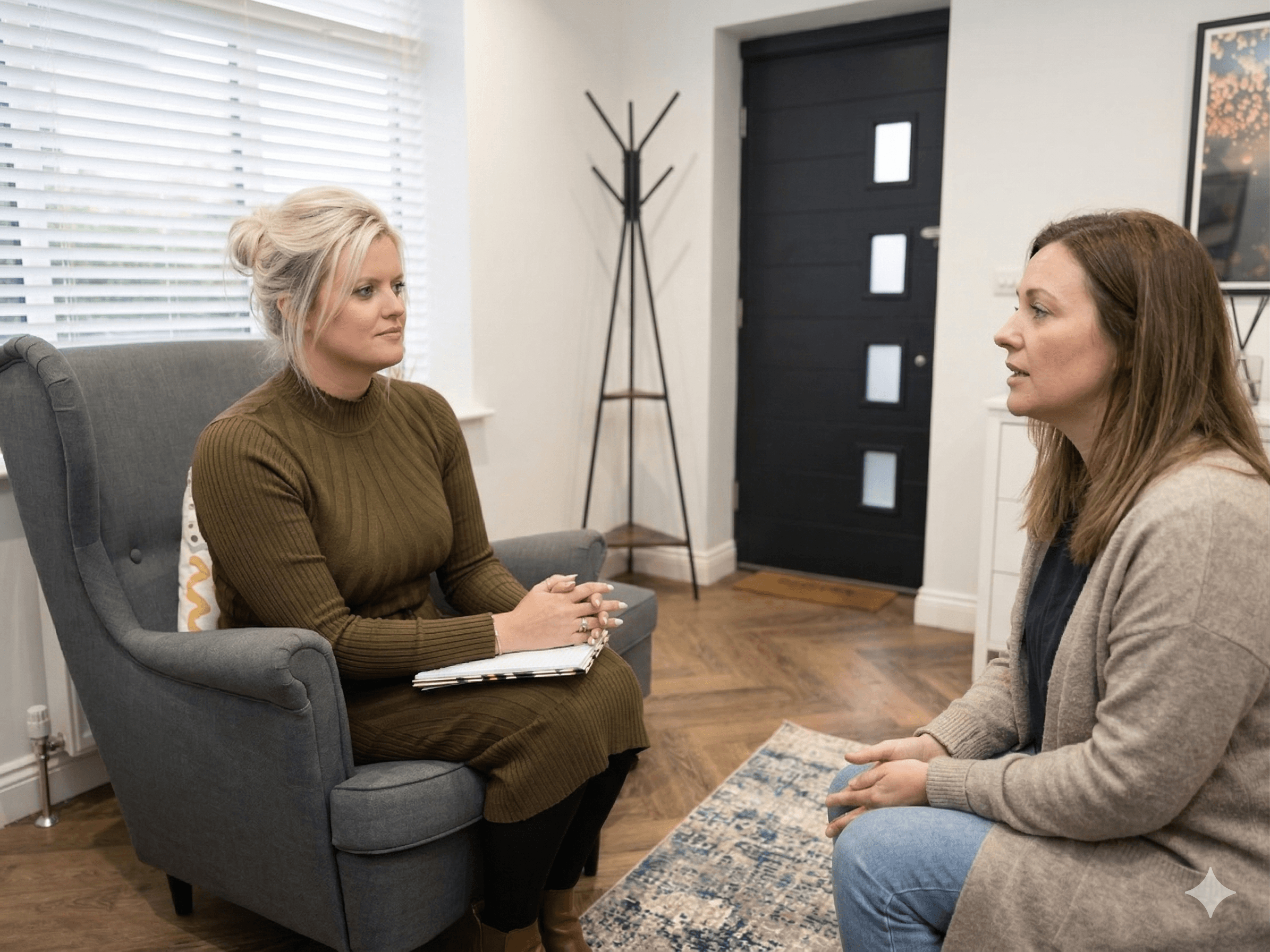
Insight alone does not heal relational wounds. Many people who seek therapy have already done significant research and self-reflection. They understand the dynamics intellectually, yet still feel trapped in familiar emotional patterns.
That is because relational trauma is stored in the body and the nervous system, not just the mind. Healing happens through the experience of a safe, consistent, attuned relationship, one that gradually allows your system to learn that connection does not have to mean harm.
My approach combines psychodynamic understanding, which explores how early experiences shape present-day patterns, with integrative tools drawn from attachment theory, somatic awareness, and trauma-focused practice. This allows us to work at the level where change actually takes root.
An integrative approach, tailored to you
I draw on a range of evidence-informed methods and adapt them to suit where you are in your process. There is no one-size-fits-all model for recovery from relational harm, and the tools I use will depend on what is most helpful for you at any given stage.
Psychodynamic exploration helps us understand the unconscious patterns, defences, and relational templates that developed in response to your experiences. Attachment-focused work addresses the way early bonds shape your expectations of closeness, safety, and trust.
Somatic and nervous-system approaches help you reconnect with your body, regulate overwhelming emotions, and widen your capacity to tolerate difficult feelings without shutting down or becoming flooded. These are woven naturally into our conversations rather than imposed as exercises.
For clients who want a more structured path, I offer a 12-session therapeutic programme designed specifically for recovery from relational trauma and narcissistic abuse.
You set the pace. I hold the space.
Therapy for relational trauma is not about forcing yourself to revisit painful experiences before you are ready. It is about building enough safety, stability, and self-trust that difficult material can be approached when the time is right.
We will never move faster than your nervous system can handle. If something feels too much, we slow down. If you need to spend weeks building trust before going deeper, that is not only acceptable, it is wise.
My role is to offer consistent, calm, non-judgemental presence, to help you notice what is happening in your body and your emotions, and to gently support you in making connections between your past experiences and your present struggles.
Therapy continues between our meetings
Much of the work of therapy happens in the days between sessions. You may notice new thoughts, feelings, or reactions surfacing as you go about your life. You might find yourself responding differently in situations that previously triggered you.
I do not set homework as a rule, but I may occasionally suggest a reflection, a grounding exercise, or a journaling prompt if it feels useful. Clients on the 12-session programme receive tailored between-session exercises designed to deepen and consolidate the work we do together.
The goal is not to make you dependent on therapy, but to help you develop the internal resources, self-awareness, and emotional resilience that allow you to navigate life with greater confidence and steadiness, long after our work together has ended.
This approach is for you if you want depth, not quick fixes
My work is best suited to adults who are ready to explore the deeper roots of their difficulties, not just manage the surface symptoms. You do not need to be in crisis to benefit from therapy, and you do not need to have a diagnosis.
You might be someone who has experienced relational trauma, emotional abuse, narcissistic abuse, complex family dynamics, or attachment wounds that continue to affect how safe you feel in relationships and how you relate to yourself.
What matters most is a willingness to be honest, to sit with discomfort when it arises, and to trust that change is possible even when it feels slow. If that resonates, I would welcome the opportunity to work with you.
Flexible options to suit your needs
I offer an initial consultation, which is a 30-minute conversation to discuss what is bringing you to therapy and whether we are a good fit. It carries no obligation.
Ongoing therapy is available as weekly or fortnightly 50-minute sessions, either face-to-face in Horsforth, Leeds, or online across the UK. Consistency is encouraged, as it supports the depth of the work.
For clients seeking a more focused path, the 12-session structured programme offers a guided recovery process with tailored exercises, between-session support, and a clear therapeutic framework.
Common questions about how therapy works
If you find yourself stuck in painful patterns, struggling with the effects of difficult relationships, or feeling disconnected from yourself, therapy can help. You do not need a diagnosis or a crisis to reach out. An initial consultation is a simple, low-pressure way to explore whether this is the right step for you.
The initial consultation is a calm, 30-minute conversation where we discuss what is bringing you to therapy, what you are hoping for, and whether we feel like a good fit. There is no pressure to commit, and you are welcome to ask any questions you have about the process.
There is no fixed timeline. Some clients work with me for a few months, others for longer. The pace depends on your needs, your goals, and the depth of what we are working through. We will review progress together regularly so that therapy always feels purposeful.
Yes. I offer sessions both face-to-face in Horsforth, Leeds, and online via secure video for clients anywhere in the UK. Online sessions follow the same format and are equally effective for the kind of deep relational work I specialise in.
Ongoing sessions are open-ended and follow the pace of what emerges in therapy. The 12-session programme is a more structured path specifically designed for relational trauma and narcissistic abuse recovery, with tailored exercises, between-session support, and a clear therapeutic framework. Both are effective. The right choice depends on your preferences and goals.
Yes. Everything discussed in therapy is held in the strictest confidence. The only exception would be if I believed there was a serious and immediate risk to your safety or someone else’s, in which case I would always try to discuss this with you first. Confidentiality is the foundation of the therapeutic relationship.
That is completely understandable, especially if your experiences involved having your feelings dismissed or used against you. We will go at your pace. You do not need to share everything at once, and there is no pressure to discuss anything before you feel ready. Building trust is part of the process.
You can get in touch through the contact page to book an initial consultation. I aim to respond within 24 hours on weekdays, and we can arrange a time that works for you. If you have any questions before booking, you are welcome to reach out and I will be happy to help.
Take the first step
You deserve support that truly understands.
If what you have read here resonates, I would welcome the chance to hear from you. An initial consultation is a simple, calm first step with no obligation.
Book an initial consultation