therapy for the lasting effects
When difficult relationships leave a lasting mark.
Relational trauma can shape how you feel about yourself, how safe you feel with others, and how you move through the world. Therapy can help you make sense of what happened and begin to recover.
What is relational trauma?
Relational trauma is the psychological harm that develops when the people closest to you, such as partners, parents or family members, become sources of pain, confusion, or emotional danger rather than safety and connection.
It does not always involve a single event. More often, it is the accumulation of experiences over time: chronic criticism, emotional withdrawal, manipulation, control, unpredictability, or the quiet erosion of your sense of self within a relationship you depended on.
Attachment is the bond you rely on most, so when harm happens within it, relational trauma can be deeply disorienting. You may struggle to trust your own perceptions, doubt whether what happened was serious enough to warrant help, or feel that the impact it has had on you is somehow your fault.
How relational trauma affects you.
The impact of relational trauma often goes far beyond the relationship itself. It can quietly shape your emotional responses, your sense of identity, and the way you relate to other people, sometimes long after the relationship has ended.
You might find yourself hypervigilant to other people's moods, constantly scanning for signs of disapproval or danger. You may feel emotionally numb in some moments and overwhelmed in others. Sleep, concentration, and self-worth can all be affected.
Many people describe a persistent sense of walking on eggshells, an inability to relax fully, difficulty making decisions, or a feeling of being fundamentally broken, even when they appear to be managing well on the outside.
These are not signs of weakness. They are the natural consequences of living in an environment where your emotional safety was compromised over time.
Why the patterns keep showing up.
One of the most frustrating aspects of relational trauma is the way it follows you. You may have left the relationship, created physical distance, or spent years reflecting on what happened, and still find yourself repeating familiar dynamics, reacting in ways that feel disproportionate, or struggling to feel settled within yourself.
This happens because relational trauma is stored not just in memory, but in the nervous system, in emotional reflexes, and in the unconscious beliefs you hold about yourself and others. Your mind developed strategies to survive a difficult relational environment, and those strategies do not simply switch off when circumstances change.
Without targeted support, these patterns can persist, not because you are choosing them, but because they became automatic long before you had the language or awareness to see them clearly.
Where it often begins.
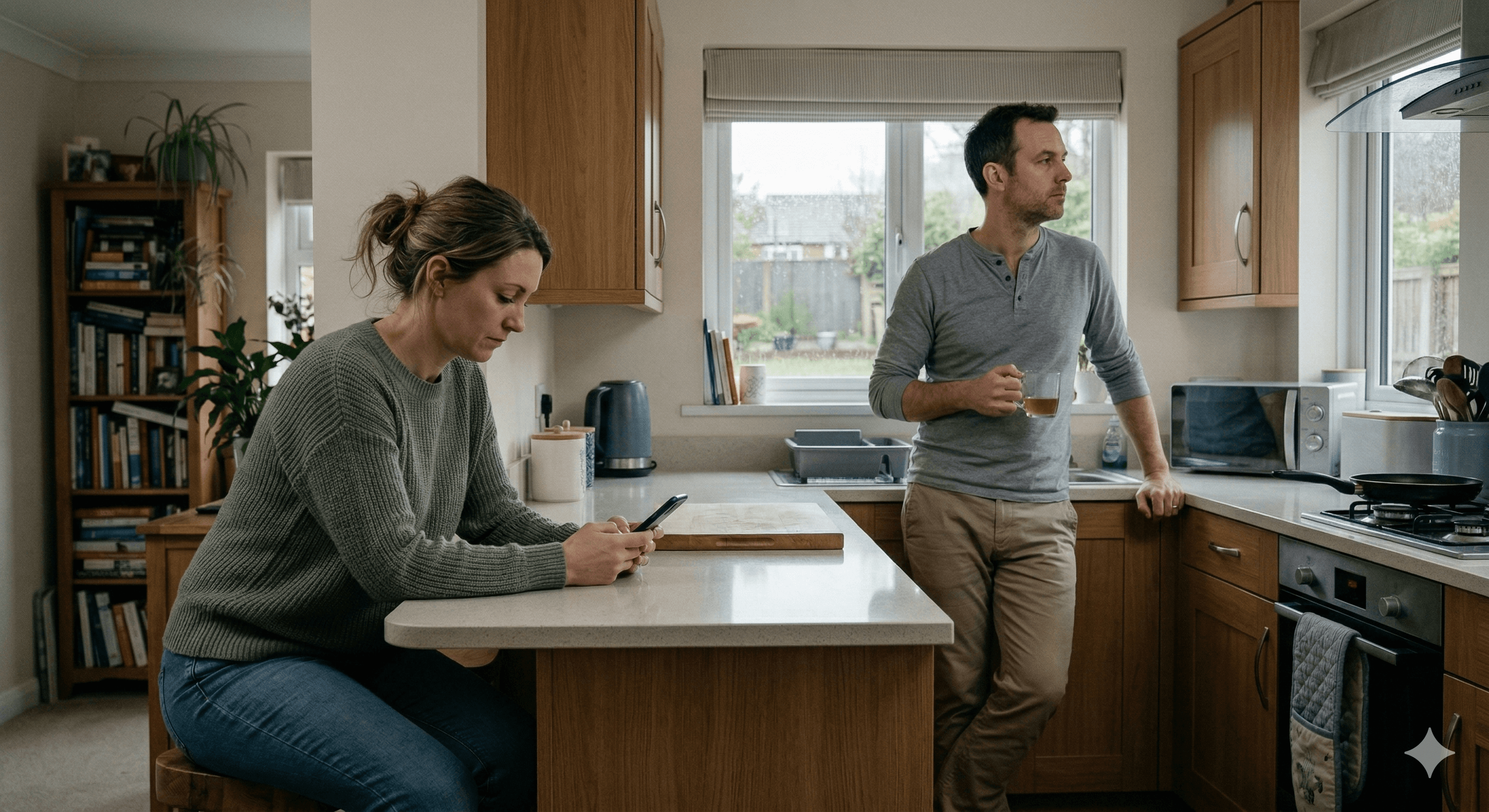
For many people, relational trauma has its roots in childhood. Growing up with a parent who was emotionally unavailable, critical, unpredictable, or controlling can set the template for how you expect relationships to work, and for the role you learn to play within them.
You may have learned early on that expressing your needs led to rejection, that love came with conditions, or that keeping the peace was more important than being honest about how you felt. These lessons, absorbed before you had the capacity to question them, can become the invisible framework through which you navigate adult relationships.
This does not mean that your family was necessarily abusive in obvious ways. Sometimes, the damage comes from what was absent rather than what was present: the attunement, validation, and emotional safety that a child needs in order to develop a secure sense of self.
How therapy helps.
Therapy for relational trauma is not about simply talking through what happened. It is about understanding how those experiences have shaped you emotionally, relationally, and physiologically, and beginning, carefully, to shift the patterns that no longer serve you.
In our work together, we will explore the dynamics that have caused harm, the beliefs about yourself that have become entrenched, and the survival strategies you developed to cope. We will also pay attention to what happens in your body: the tension, the shutting down, the moments of overwhelm, because healing from relational trauma requires more than insight alone.
The aim is not to erase the past, but to reduce its grip on the present. Over time, therapy can help you feel more grounded, more trusting of yourself, and more capable of forming relationships that feel safe and nourishing rather than depleting.

A trauma-informed, psychodynamic approach.
My approach to relational trauma therapy draws on psychodynamic understanding and trauma-informed practice. This means we work with both the conscious and unconscious dimensions of your experience, exploring not just what you know about your patterns, but the deeper emotional logic that drives them.
Psychodynamic work helps us understand how past relational experiences continue to influence the present: the roles you learned to play, the defences you developed, and the attachment patterns that shape how safe you feel in closeness and in distance.
Trauma-informed practice ensures that this exploration happens at a pace that feels manageable. We work with your nervous system, not against it. This builds capacity for emotional regulation alongside deeper understanding.
Sessions take place face-to-face in Leeds and Horsforth, or online across the UK. You can read more about how I work and what to expect from the therapeutic process.
When relational trauma includes narcissistic abuse.
Narcissistic abuse is a specific form of relational trauma characterised by manipulation, control, gaslighting, and the systematic undermining of your reality. If this has been part of your experience, you may carry an additional layer of confusion: questioning what was real, whether you were to blame, and why it is so difficult to move on.
I work with clients recovering from narcissistic abuse in both partner and family dynamics, and I understand the particular challenges this kind of relational harm presents. The self-doubt, the grief, the shame, and the difficulty trusting your own judgement are all recognised parts of the recovery process.
If you would like to read more about this area of my work, you can visit the dedicated narcissistic abuse therapy page.
You might recognise yourself here.
You do not need a diagnosis to seek therapy for relational trauma. You may simply notice that relationships feel harder than they should, that you carry tension or anxiety you cannot fully explain, or that you have been managing the effects of a painful relationship for longer than you would like.
Therapy may be helpful if you find yourself caught in cycles of people-pleasing, emotional shut-down, self-blame, or attraction to dynamics that ultimately cause harm. It may also be right for you if you have left a damaging relationship and are finding it harder than expected to feel like yourself again.
Whatever brought you here, you deserve support that takes your experience seriously, moves at a pace that feels safe, and helps you build something more stable and connected going forward.
Common questions about relational trauma therapy.
PTSD typically develops after a single traumatic event or a clearly defined period of danger. Relational trauma, sometimes referred to as complex trauma or CPTSD, develops over time within the context of close relationships. It affects not only how you respond to threat, but how you feel about yourself, how you relate to others, and how you regulate your emotions. Both are real and serious. They simply have different origins and patterns.
There is no fixed timeline. Some clients find meaningful relief within a few months; others benefit from longer-term work as they process deeper patterns and rebuild their sense of self. We will check in regularly about how therapy is feeling for you, and the pace will always be guided by what feels right and manageable.
No. Therapy is not about recounting every detail of your experience. We work with what feels relevant and at a pace that does not overwhelm you. Sometimes, the most important work happens through exploring your present-day patterns and emotional responses rather than revisiting specific events in detail.
Many people who have been through relational trauma minimise or question their experience. This is one of the most common effects of the trauma itself. You do not need to be certain that your experience qualifies as trauma in order to benefit from therapy. If something in your relational history is still affecting how you feel or function, that is enough.
Yes. You do not need to have left a relationship to begin therapy. Many clients start therapy while still navigating a difficult dynamic, and the work can help you gain clarity, build emotional resilience, and make decisions that feel grounded rather than reactive.
Yes. I offer sessions both face-to-face in Leeds and Horsforth, and online via secure video call for clients anywhere in the UK. Online therapy is equally effective for relational trauma work and offers greater flexibility.
You do not have to keep navigating this alone
Recovery from relational trauma is possible.
With the right support, you can understand the patterns that have held you back, reduce the emotional weight you are carrying, and begin building something steadier and healthier.
Book an initial consultation